Aerospace engineering, embedded AI and explainable prediction—connected by the same ambition: build technology that works in the real world.
Celeste EcoFlyers develops electric aircraft with pneumatic wings and the intelligence to support useful missions. Neurytika is an important branch of that work: making structured data actionable through predictions and evidence people can inspect.
Aircraft designed and built in FranceEmbedded intelligenceExplainable software for organizations
TWO CONNECTED ENGINEERING BRANCHES
Build the aircraft. Bring intelligence closer to the data.
Aerospace puts practical constraints at the center of engineering: mass, energy, operating conditions and the information available when a decision is needed.
Our aircraft and AI activities meet around those constraints. Pneumatic structures address the physical side; lightweight, inspectable computation addresses how data can become a useful signal. Neurytika brings that same emphasis on local processing and clear evidence to enterprise prediction projects.
01 / AEROSPACE
Electric aircraft with pneumatic wings.
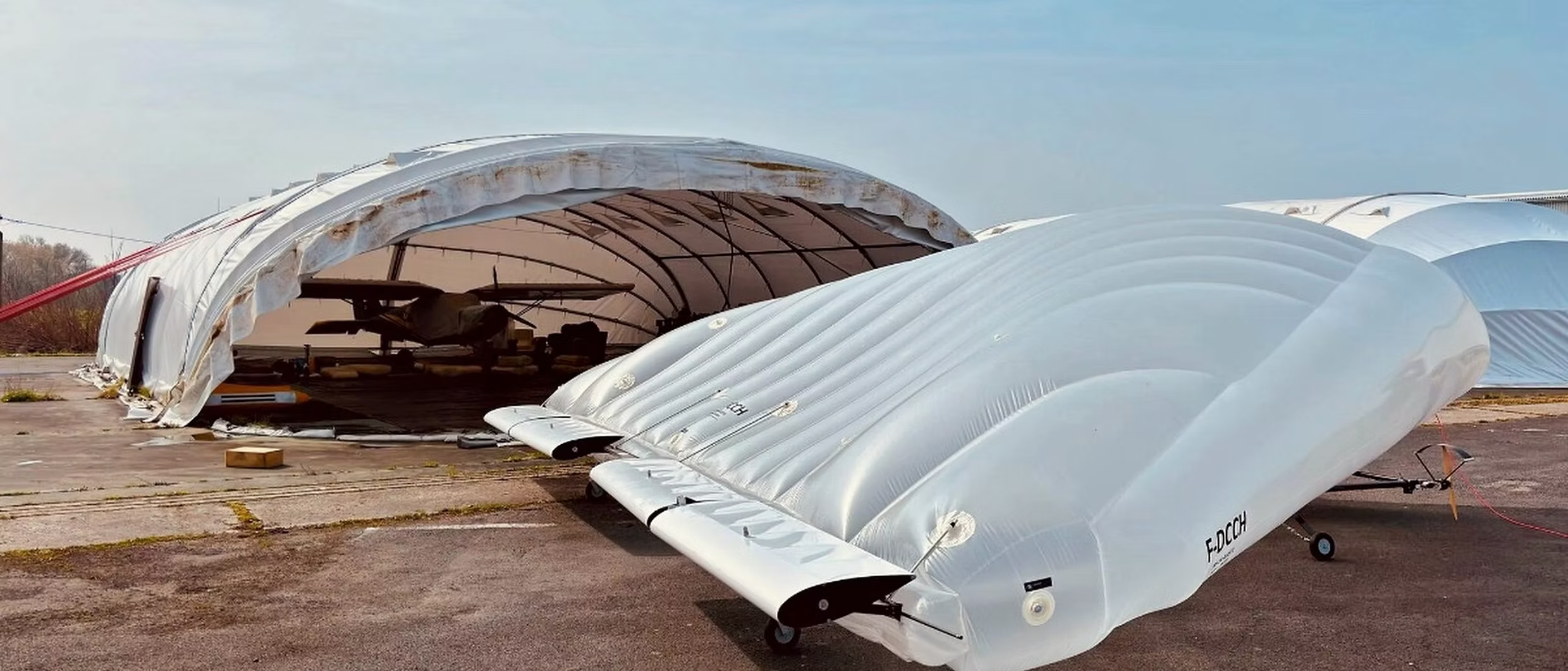
Celeste’s dAS20 program uses a pressurized textile wing, with aerodynamic lift and electric propulsion. The current prototype has an 8 m wingspan, and the company records its first take-off on 7 May 2026 at Le Havre airport.
Neurytika combines a classification engine with an exploration workflow. Use structured records, build a model, inspect contributing patterns and integrate the result into your organization’s work.
PhD in computational neuroscience and author of the Evidence Ratio Classifier research. His work connects interpretable learning, embedded systems and real-world sensing applications.
A textile engineer specializing in pneumatic structures and industrialization, bringing materials expertise to the development of Celeste’s inflatable-wing aircraft.
Useful intelligence. Right where the data is produced.
For an autonomous drone, processing sensor information onboard can help turn measurements into timely mission signals while making deliberate use of computing power, energy and connectivity.
That is why embedded AI is central to Celeste’s development direction. ERC’s one-pass learning approach and explicit evidence connect hardware-conscious computation with a model that engineers can inspect. The same engine provides the foundation for Neurytika’s explainable prediction workflow.
01Sensor measurements
Telemetry and structured observations
→
02Local classification
An embedded model close to the data
→
03Useful mission signal
A category with supporting evidence
Timely local signals
Process available measurements on the device and share the resulting category or alert when the mission needs it.
Deliberate resource use
Design the computation around the aircraft’s processing and energy budget, with the learning method and target hardware considered together.
Evidence engineers can inspect
Connect a predicted category to recorded feature combinations and their support, so teams can examine the model’s behavior.
EXAMPLES OF ONBOARD WORKFLOWS TO DEVELOP
⌁
Environmental observation
Classify structured environmental measurements into an alert category and prioritize observations for an operator to review during a monitoring mission.
⚙
Equipment-state monitoring
Combine recorded vibration, temperature or electrical measurements to identify an operating-state category and provide context for engineering review.
↗
Mission information filtering
Classify structured observations locally and choose which categories of information are most useful to relay to the ground team.
From onboard sensing to customer, quality and fraud records, the shared objective is clear: a useful prediction, computed in the right environment, with evidence people can examine.
ERC development combines peer-reviewed research with patent filings. The scientific paper presents the learning rule, evaluation protocols and results; the patent applications form part of Celeste’s intellectual-property strategy for the technology.
FRENCH PATENT FILINGFR2510431
US PATENT APPLICATION19/805,651
Under examination
Evidence ratio classifier: A one-pass model for fast incremental learning F. L. Olivier Manette · Neurocomputing, Volume 659, article 131797.